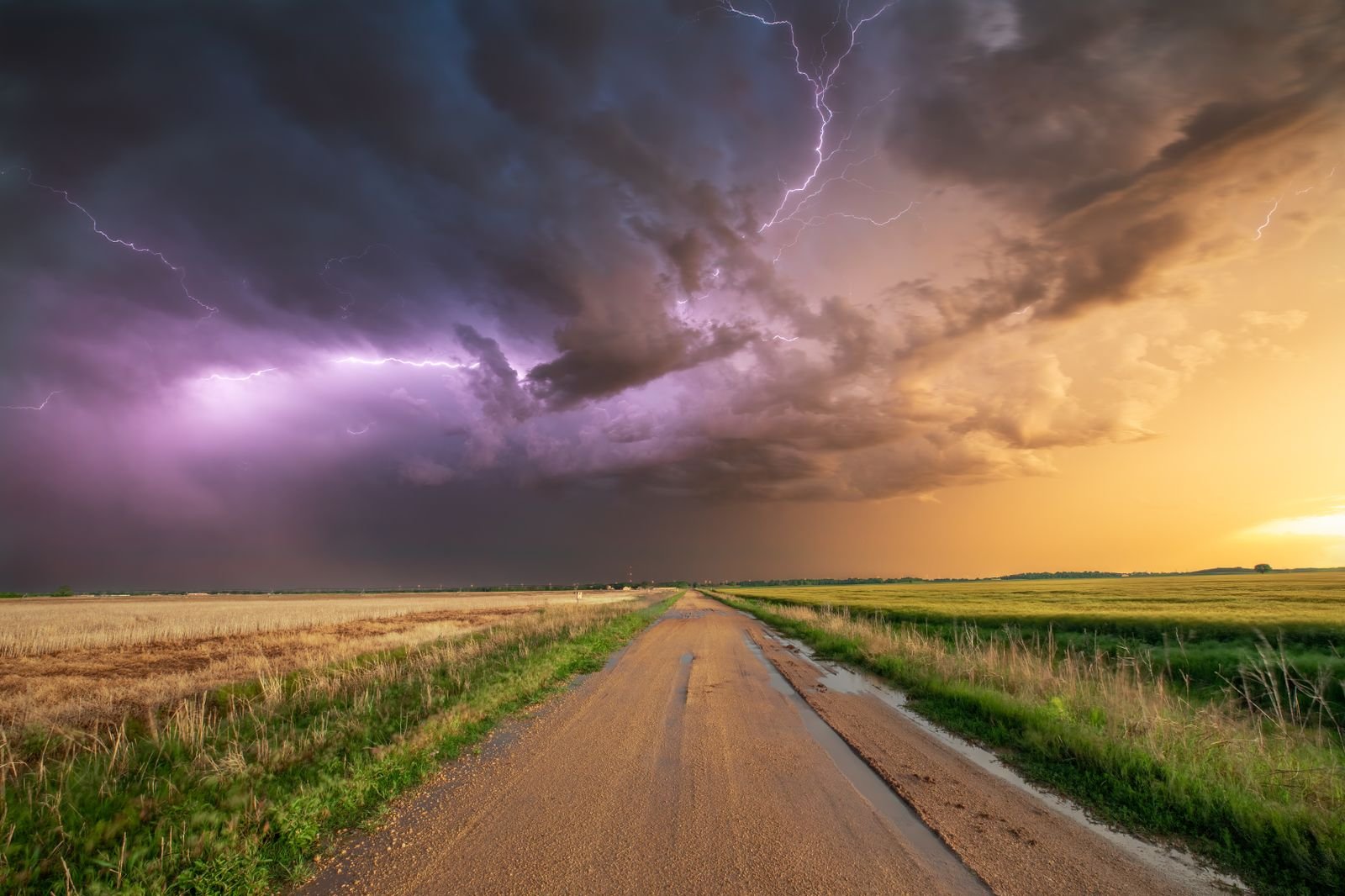
Grady County ranks 8th in Oklahoma for tornadoes — 96 of them from 1950 through 2025, according to the National Weather Service office in Norman. But when you open the federal disaster declarations file for the same county, ice shows up far more often than tornadoes: 11 of Grady County’s 37 OpenFEMA declaration records are coded as severe ice storms, and only 2 are coded as tornadoes.
That gap is the honest finding for Tuttle, Chickasha, Minco, Amber, and the Bridge Creek area. Tornadoes get the headlines. Winter is a bigger share of the paperwork.
What the tornado ranking says
NWS Norman’s county totals table puts Grady County just behind Tulsa County and just ahead of Kiowa and Lincoln counties. Neighbors McClain (85) and Canadian (113) sit close by, and Oklahoma County tops the state at 138. Grady is a big county — it stretches from the edge of the south metro past Chickasha toward Rush Springs — so a large raw count partly reflects a lot of ground for storms to cross.
A count over 75 years is a long-view weather fact. It isn’t a forecast, and it isn’t a premium for any one road outside Tuttle.
What the federal file says
FEMA’s OpenFEMA dataset lists every declaration that named Grady County. Its records for the county start in 1983 and run through the 2025 Norge Fire. By FEMA’s incident coding:
- 14 severe storm records
- 11 severe ice storm records
- 4 flood records
- 3 fire records
- 2 tornado records, including the May 3, 1999 declaration
- 2 biological (COVID-19) and 1 hurricane-evacuation record
Coding matters here. Many “severe storm” declarations include tornadoes in their titles, so the 2 tornado records undercount tornado activity. Even so, the ice-storm column is nearly as long as the severe-storm column, with records in 2000, 2001, 2002, 2007, 2010, 2015, 2020, and 2021. Some of those years show both an emergency and a major-disaster record for the same winter event.
The unflattering part
Here is the finding that doesn’t help anyone sell anything: household-level federal aid is rare. Individual Assistance — the program that can send grants to households — was declared in just 7 of Grady County’s 37 records, and one of those 7 was the 2020 COVID-19 declaration. Most declarations here funded public repairs, debris removal, and emergency protective measures rather than checks to homeowners.
We’ve written before about what FEMA aid typically looks like in Oklahoma. The Grady County file reinforces it: a federal declaration is not a homeowners policy, and most of the time it isn’t household money at all.
Why ice deserves a slow read
Ice storms don’t read like tornado days, but they create their own kind of claim: limbs through a roof, a collapsed carport, a power outage that runs long enough to freeze a pipe. On acreage outside Minco or Amber, add fences, barns, and outbuildings under heavy limbs.
Most homeowners policies of this type handle falling trees, weight of ice, and freezing pipes in specific ways, and the wording varies more than people expect — especially around whether the home was heated and how detached structures are treated. We covered the statewide picture in Oklahoma’s ice storm disaster record, and the McClain County read next door in McClain County’s tornado record.
The wind/hail deductible still matters in Grady County — it’s tornado country by any measure. It just shouldn’t be the only line that gets read.
The address-level question
A county table and a federal file can tell you what has happened across hundreds of thousands of acres. They can’t tell you how a 2004 roof in Tuttle or a metal shop building near Chickasha is written. Your policy is the thing that answers that.
If you live in Grady County and want someone to walk through the freeze, ice, and wind/hail sections of your declarations page with you, call (405) 861-8500 or start with our home insurance page.
This article is general information about how coverage typically works, not advice about your specific situation. Policy language — not website descriptions — determines coverage, and your policy is the only thing that says what you have.