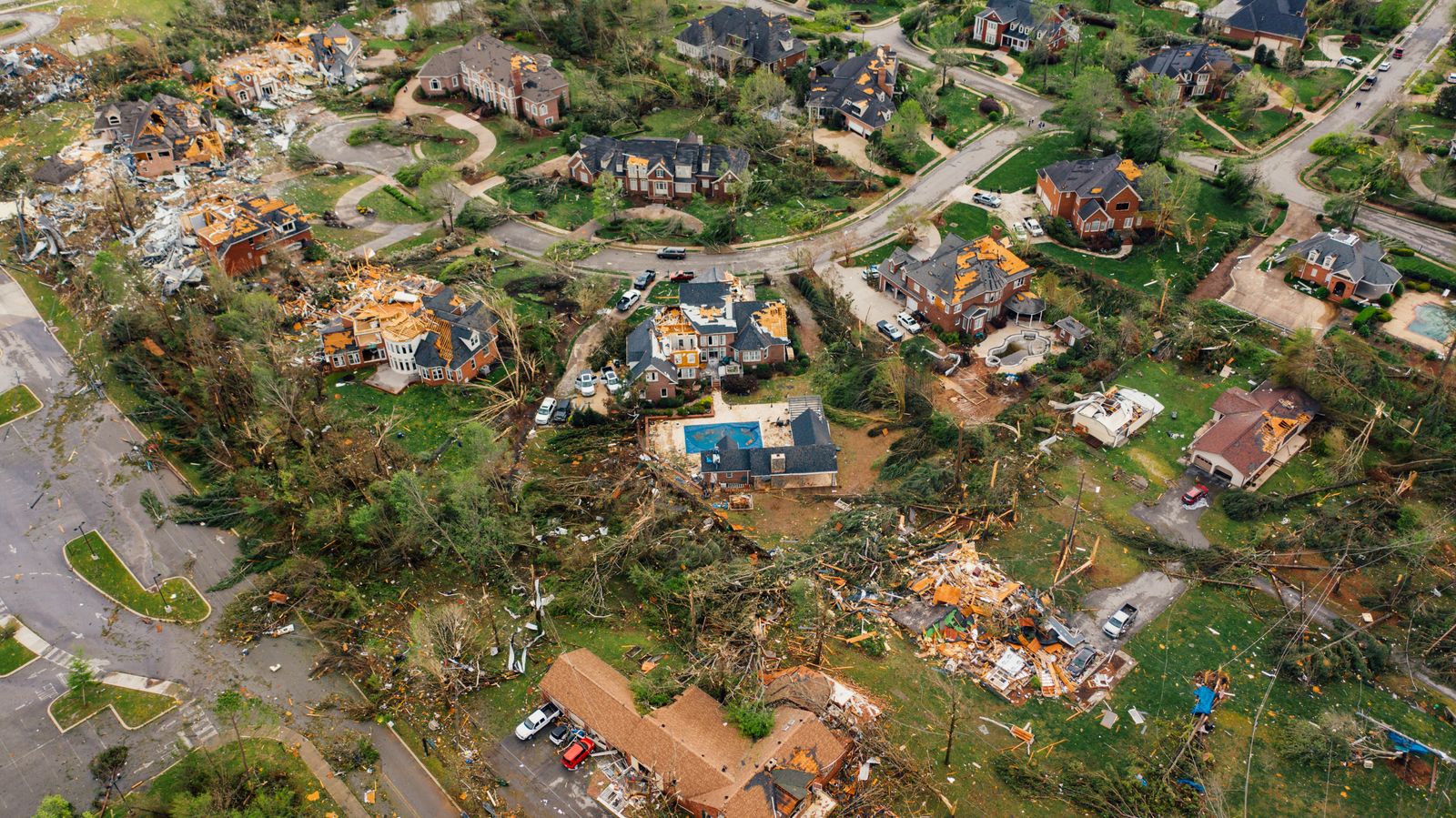
Since 2003, FEMA has approved 22,011 Oklahoma households for its Individuals and Households Program across 21 declared disasters, and paid out about $124.8 million to them. That works out to roughly $5,670 per approved household. The biggest tornado event in the record, the May 2013 declaration that covered Moore, averaged about $4,130. Those are FEMA’s own numbers, pulled from its public data feed, and they answer a question we get in the office every spring: if a storm takes the house, doesn’t the government step in? It does. For about the price of a used car.
Where the numbers come from
FEMA publishes two datasets that fit together. The first lists every disaster declaration by state and county. The second, the Web Disaster Summaries, lists how many applicants were approved for household aid and how many dollars went out under each declaration. We joined the two for Oklahoma and left out the 2020 COVID declaration, which was a different kind of event.
Oklahoma has 99 major disaster declarations in the federal record. Only 58 of them opened a program for individuals and households at all. The rest opened Public Assistance, which reimburses governments for roads, debris, and public buildings, and never sends a check to a homeowner. Of the 58, dollar detail is on file for 21, mostly from 2003 forward.
What the declarations actually paid
A few from the metro’s own history, per the summaries:
- May 2013 tornadoes (DR-4117) — Oklahoma, Cleveland and Canadian counties among the designated areas. 3,663 households approved, $15.1 million, about $4,130 each.
- May 2015 storms and flooding (DR-4222) — the largest household count in the record, with Logan County added to the metro three. 4,610 approved, $18.6 million, about $4,030 each.
- Spring 2019 flooding (DR-4438) — Canadian and Logan among the designated counties. 2,202 approved, $15.6 million, about $7,070 each.
- February 2021 ice storm (DR-4587) — all 77 counties. 1,205 approved, $3.4 million, about $2,850 each.
- March 2025 wildfires (DR-4866) — Oklahoma, Cleveland and Logan counties designated. 381 approved, $8.1 million, about $21,270 each — the highest average in the set, because wildfire tends to produce total losses rather than roof claims.
The pattern holds across two decades: the more households a disaster touches, the smaller the average grant.
Why the checks are the size they are
FEMA is not being stingy. The program is doing what it was built to do. FEMA’s own program page describes household aid as help with uninsured or underinsured necessary expenses and serious needs, and says plainly that “IHP assistance is not a substitute for insurance.” The application process asks for an insurance determination letter, and FEMA states it cannot pay for losses that insurance covers.
So the grant is designed to sit behind a policy, not in front of one. Temporary housing, a few months of rent, repairs to make a home safe and sanitary, replacing essential items. It is not built to rebuild a 2,200-square-foot house in Deer Creek, and the averages above show it doesn’t.
The finding that doesn’t flatter anybody
Here is the unflattering part for our side of the counter. The reason FEMA aid exists at the size it does is that a meaningful number of households in every one of those declarations showed up with gaps: no policy, a lapsed policy, a wind/hail deductible larger than they expected, or a roof settled at actual cash value on a house that needed replacement cost. Federal aid filled a few thousand dollars of that. The rest was the homeowner’s.
We don’t have a way to measure how many of those gaps were ours, in the sense of a policy sold and never revisited. Some of them surely were. That is why we’d rather have the deductible conversation in September than in May.
How the pieces typically fit after a storm
Most homeowners policies in Oklahoma handle wind and hail under a separate percentage deductible, so a $300,000 dwelling with a 2% wind/hail deductible starts with $6,000 of loss before the policy responds. Loss of use coverage, when a policy includes it, is the piece that overlaps most with what FEMA’s temporary-housing grants do. Flood is a separate purchase and always has been, and the 2015 and 2019 declarations above were flood events — FEMA’s household program is aimed at what a policy did not pay, which for a house without flood coverage is all of it.
None of that tells you what your policy does. Your policy is the thing that answers this, and it is worth reading the deductible page before the next declaration rather than after.
If you’d like a second set of eyes on the wind/hail deductible and the roof settlement terms on your homeowners policy, call (405) 861-8500 or stop by the Fretz Avenue office — we’ll go through the declarations page with you, no runaround.
This article is general information about how coverage typically works, not advice about your specific situation. Policy language — not website descriptions — determines coverage, and your policy is the only thing that says what you have.