Most Oklahoma tree service businesses need a small stack of commercial coverages, not a single magic policy — and the stack changes with crew size, whether you climb or stay on the ground, and how much storm-debris work you take after a wind event. General liability is usually the starting point. Commercial auto and the gear on the trailer come next for any operation that moves from driveway to driveway. Workers’ compensation enters as soon as you have employees in a trade that spends its day near saws, chippers, and power lines.
Around Edmond and the OKC metro we see tree crews after May hail, after June wind, and again when fall fronts drop limbs across Yukon and Midwest City streets. The HOA’s certificate request is often what starts the insurance call. The certificate is not the coverage. The form behind it is.
What general liability is doing here
General liability is the everyday “someone got hurt or something got damaged and they say it was your business” coverage for many outdoor trades. A limb takes out a section of fence. A wood chip hits a parked car. A customer walks into the work zone. Those are the ordinary stories. Policies vary on limits, deductibles, and exclusions more than comparison charts admit.
What liability typically is not: a substitute for workers’ compensation, a blanket on every utility-line scenario, or a promise that a city’s preferred-vendor list matches your actual operations. Climbing, crane work, and right-of-way jobs can change how underwriters read the same “tree service” label.
Commercial auto and the trailer
Chippers, bucket trucks, dump trailers, and crew trucks are vehicle risks and equipment risks. Commercial auto, hired/non-owned questions if employees run errands in personal vehicles, and how tools travel on the trailer are separate from the shop policy on a rented lot. We have walked similar mobile-equipment patterns for landscaping businesses; the height and saw exposure is what makes tree work its own guide.
Workers’ compensation without the lecture
Oklahoma employers generally meet workers’ compensation rules once they have employees. Tree work is not a low-injury trade. Owner-only operations sometimes assume they can skip the conversation entirely; the honest version still asks who is on the crew tomorrow if a cousin shows up for storm cleanup week. Misclassifying labor to keep a certificate cheap is how claims get ugly.
Storm season is a demand spike — and an underwriting question
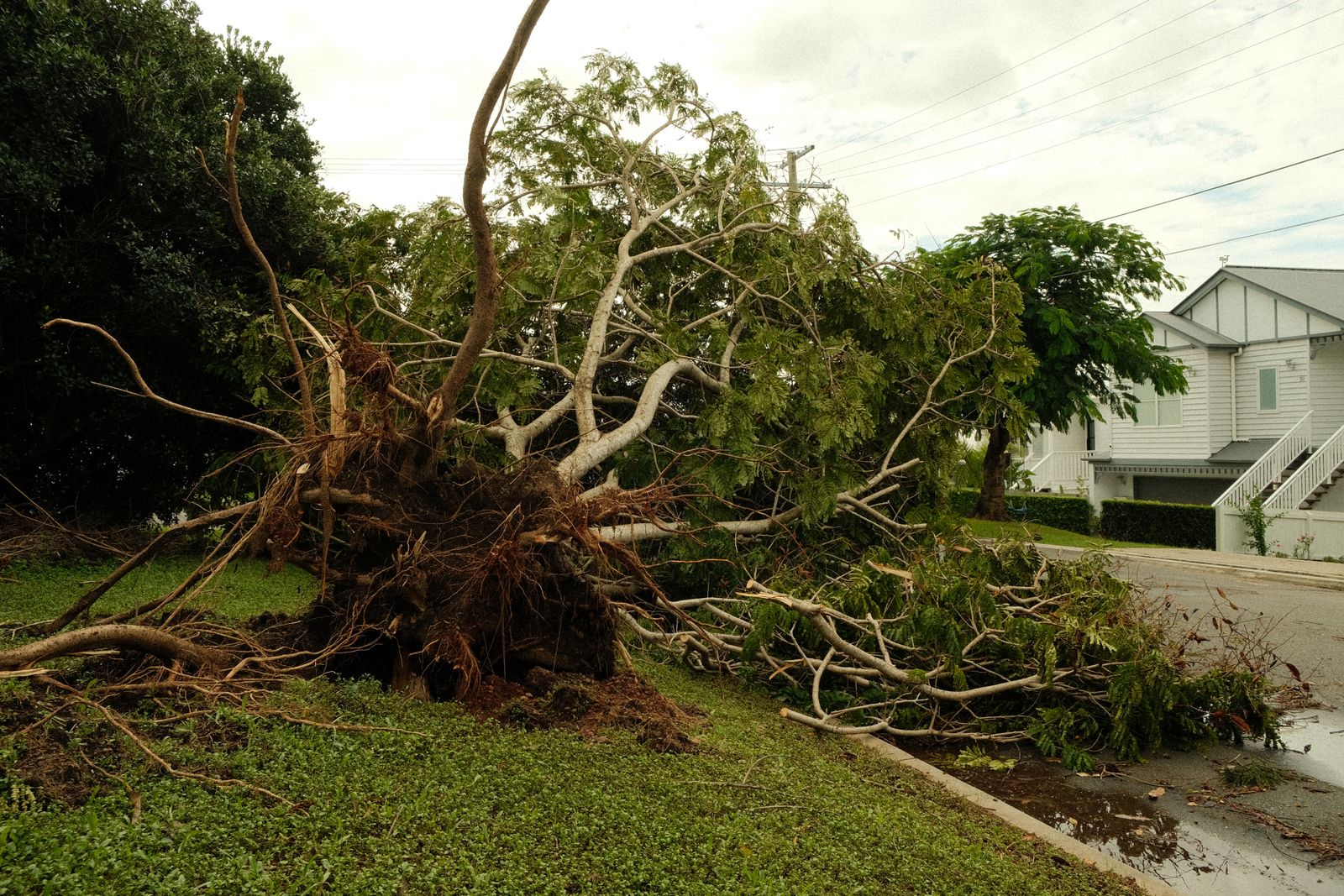
After a derecho-style wind event or a tornado day, every tree service in the metro gets the same flood of calls. That spike is income. It is also when applications that still say “occasional residential pruning” meet a week of commercial debris contracts. The unflattering finding: a lot of certificates go out describing light landscape work while the Instagram feed shows crane trucks under power lines. Underwriters and claim adjusters read the application and the form, not the highlight reel.
Homeowners asking who pays when a tree hits a house is a different article — we covered the residential side in fallen tree damage. This guide is about the business that answers those calls.
Certificates without the theater
HOAs, municipalities, and general contractors love certificates of insurance. A certificate is evidence that a policy existed on a date with listed limits. It is not a promise that every claim scenario is handled. Additional-insured requests should match a real endorsement when they matter — paper alone does not create coverage that is not on the form.
Your policy is the thing that answers what happens when a specific incident hits a job site or a truck. This guide is the map of which conversations usually belong on the table.
Call (405) 861-8500 if you want to walk the stack for a tree service in the metro — or see business insurance for how we approach small commercial risks.
This article is general information about how coverage typically works, not advice about your specific situation. Policy language — not website descriptions — determines coverage, and your policy is the only thing that says what you have.