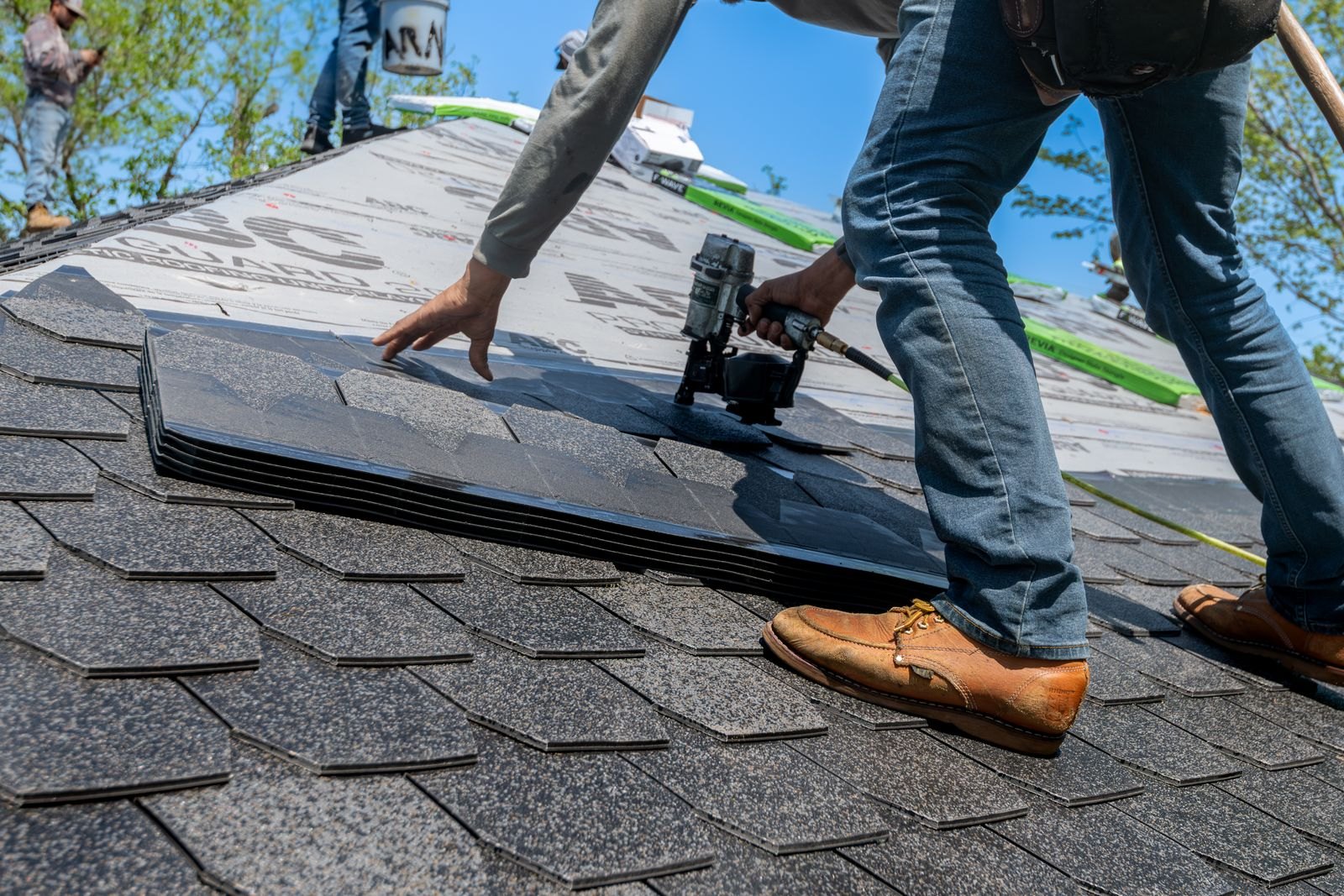
Roofing is the one trade in Oklahoma where the state tells you what your insurance has to look like before you can legally take the job. Under the Roofing Contractor Registration Act, a roofing contractor has to register with the Construction Industries Board, and that registration requires evidence of general liability coverage of at least $500,000 for residential work — $1,000,000 for the commercial endorsement — plus proof of workers’ compensation compliance or a documented exemption.
That’s the floor set by statute. Everything after it is the part most owners actually have questions about.
What the State Requires
The CIB administers the registration. To get one, a contractor submits qualifications, shows evidence of liability insurance, shows workers’ comp coverage or exemption, proves lawful presence, and pays the fees. The registration renews annually. The individual registration holder’s name has to appear on the certificate of insurance, and the CIB itself is listed as certificate holder — that catches people, because a generic certificate the agency issued for a job site won’t satisfy it.
Commercial roofing is a second step. It requires a commercial endorsement on top of a residential registration in good standing, an exam through a third-party testing vendor, and the higher $1,000,000 liability figure.
The enforcement side is worth knowing about: failure to register is a misdemeanor punishable by a fine of up to $500, initiated by the district attorney’s office with jurisdiction. Small number, but it’s a criminal citation attached to a business that lives on homeowners trusting it.
The Rest of the Stack
General liability is what the state asks about, and it’s the coverage that responds when work damages someone else’s property or injures someone who isn’t an employee. On a roof that’s not a hypothetical — a torch, a tear-off, a dropped bundle, a nail in a tire.
Workers’ compensation is the other half of the state’s question and the one with the most weight behind it in this trade. Roofing crews work at height in Oklahoma heat, and comp is generally the mechanism for on-the-job injury.
Commercial auto usually matters more here than owners expect. A loaded dump trailer, a truck with a boom, ladder racks, crews driving between Guthrie and Moore in a day — personal auto policies typically are not written for that, and the gap tends to surface at exactly the wrong moment.
Then there are the trade-specific ones. Tools and equipment coverage (often written as inland marine) generally follows gear that moves from job to job rather than sitting at a shop. Installation floater coverage typically addresses materials staged on a site before they’re installed — a pallet of shingles waiting on a driveway is a real exposure in hail country. Umbrella coverage sits above the primary limits, and general contractors and property managers frequently require it in writing before a subcontractor sets foot on a commercial project.
The Storm-Chasing Problem Nobody Enjoys Discussing
Oklahoma roofing has an out-of-state problem after every major hail event, and it colors how carriers look at the whole trade. Underwriters ask about crew composition, subcontractor use, percentage of work that’s insurance-restoration versus retail, height and steepness of typical jobs, and whether the business does any commercial or multi-family work. Answers to those questions move eligibility and pricing more than the size of the business does.
Honest note: this is a hard class to place. Not every carrier writes roofing at all, and the ones that do can be particular. An established local roofer with a clean loss history and documented safety practices has meaningfully more options than a new registration with a rented truck — and that’s not a sales pitch, it’s just how the market behaves.
Before You Bid the Next One
The certificate requirements, the endorsement question, the subcontractor language in a general contractor’s agreement — these get answered on paper, not in conversation, and the policy is the thing that answers them.
If you’re running a roofing business anywhere in the OKC metro and want a second set of eyes on what you’re carrying, learn about our business insurance services or call (405) 861-8500. Brandon handles commercial accounts personally.
This article is general information about how coverage typically works, not advice about your specific situation. Policy language — not website descriptions — determines coverage, and your policy is the only thing that says what you have.