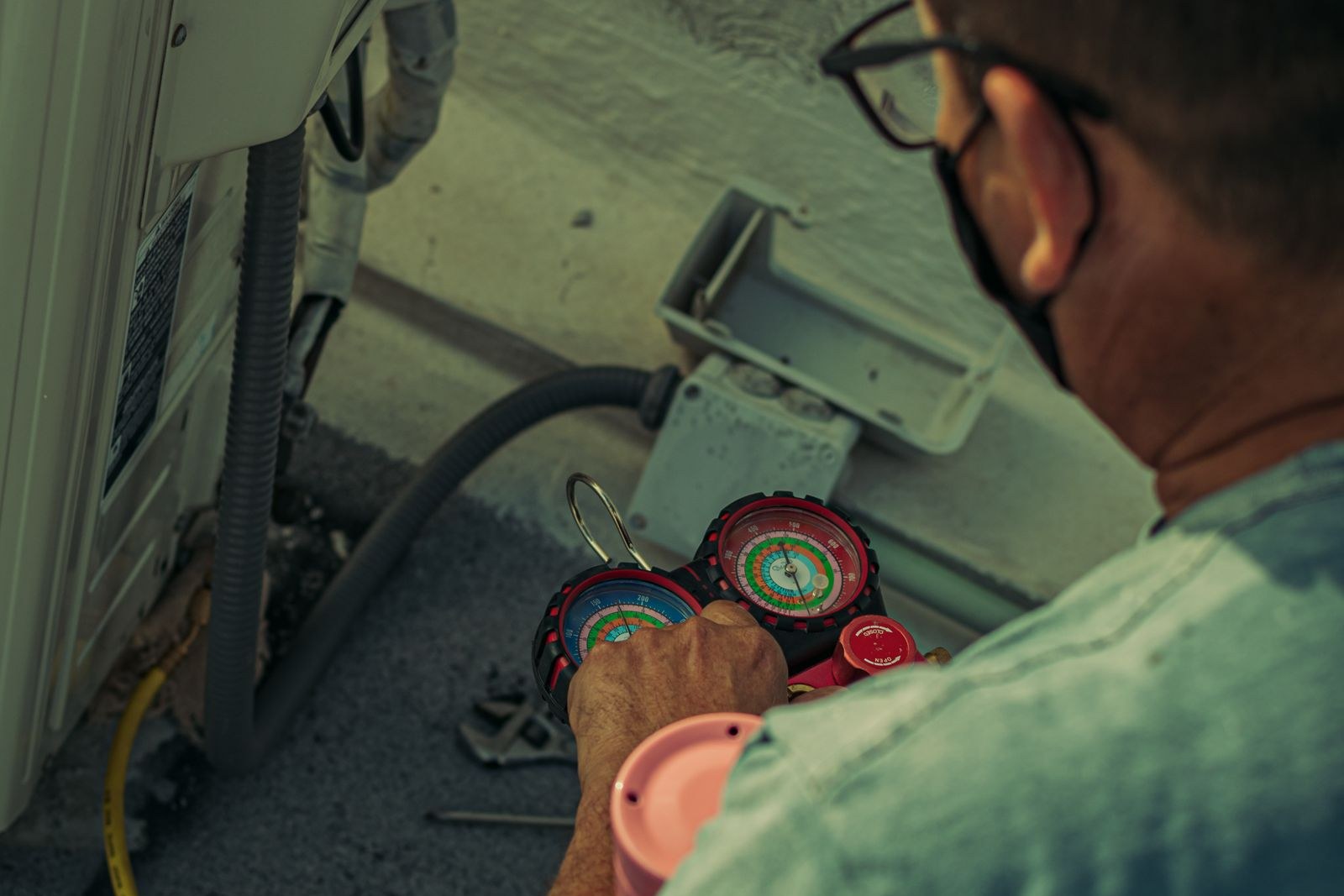
If there’s a season when the OKC metro remembers HVAC contractors exist, it’s right now. July run of 100-degree days, condensers giving out across every neighborhood from Mustang to Deer Creek, and phones that don’t stop. It’s also the season when a busy shop is most exposed — more jobs, more drive time, more helpers on the payroll, less time to think about paperwork. Here’s how insurance typically comes together for an Oklahoma HVAC business.
Start With the License, Because the State Does
Mechanical work is a licensed trade in Oklahoma, regulated by the Construction Industries Board. To hold an active mechanical contractor license, the CIB requires a $5,000 surety bond and proof of at least $50,000 in commercial general liability coverage. That’s the legal floor to operate — not a judgment about what a claim actually costs. A compressor fire or a flooded ceiling can run past $50,000 without trying, which is why most established shops carry limits well above the minimum.
Worth knowing: a surety bond and liability insurance are different animals. The bond protects the public and the state if the contractor fails to meet obligations. Liability insurance responds to damage or injury caused by the work. Licensed shops generally need both.
The Claim That Shows Up After You’ve Left
The distinctive risk in HVAC isn’t the ladder or the lifting — it’s that the work keeps operating after the technician drives away. A condensate drain that lets go over a finished ceiling, a fitting on a gas line that wasn’t quite right, a heat exchanger issue that surfaces in November. This is what completed-operations coverage inside a general liability policy is built for, and it’s the part of the policy worth actually reading. Policies vary on how long completed work is covered and what counts as “your work” versus resulting damage — the exclusions section is where those answers live.
Tools, Vans, and the Stuff In Between
Recovery machines, vacuum pumps, gauge sets, brazing rigs — an HVAC shop’s equipment lives in the truck, not in a building. Standard commercial property coverage is generally written around a fixed location, which is why gear that travels usually gets covered on an inland marine (contractors’ equipment) form instead.
The van itself needs a commercial auto policy once it’s doing business work. A personal auto policy with a magnetic sign on the door is one of the most common gaps we see in the trades, and it tends to get discovered at the worst possible moment — after a wreck on the Kilpatrick with a fully loaded van.
Employees, Helpers, and the 1099 Question
Oklahoma generally requires workers’ compensation coverage once a business has even one employee, and the penalty for skipping it can run up to $1,000 per day. The label on the paycheck doesn’t settle the question — a “1099 helper” who works your schedule, in your truck, with your tools, can still be treated as an employee when something goes wrong. If you’re a true one-person shop with no help, workers’ comp may genuinely not be required — that’s an honest piece of good news, and it changes the day you hire.
What This Looks Like in Practice
Most Oklahoma HVAC businesses end up with some combination of general liability with completed operations, inland marine for equipment, commercial auto for the vans, workers’ comp once there’s a crew, and, as contracts get bigger, sometimes a bond or umbrella a general contractor insists on. Which pieces, at what limits, depends on the size of the operation — and the policy language is the only thing that says how any of it actually responds.
If you run an HVAC shop anywhere in the OKC metro, we’re happy to look at what you have and what a contract is asking for. Learn about our business insurance services, or call (405) 861-8500 between service calls — we’ll keep it quick.
This article is general information about how coverage typically works, not advice about your specific situation. Policy language — not website descriptions — determines coverage, and your policy is the only thing that says what you have.