When a house is damaged badly enough that part of it has to be rebuilt, the rebuild has to satisfy the building code in force at the time of the work — not the code the house was built under. That difference costs money, and in property insurance it is usually treated as its own thing rather than as part of the repair. The coverage that addresses it is commonly called ordinance or law coverage, and on many forms it is limited to a percentage of the dwelling limit, or added by endorsement, rather than included without a cap.
That is the whole idea. The rest is why it comes up more often around here than people expect.
Oklahoma has changed its residential code three times since 2011
The Oklahoma Uniform Building Code Commission sets a statewide minimum. The current adoption is the 2018 edition of the International Residential Code, effective September 14, 2022. Before that it was the 2015 edition, effective November 1, 2016. Before that, the 2009 edition, effective July 15, 2011. There was also a 2018 amendment specifically addressing storm shelter requirements — an Oklahoma detail if there ever was one.
Do that arithmetic against the housing stock in Edmond, Deer Creek, or the older parts of Guthrie. A home finished in 2008 was built under rules that have since been replaced three times over. A 1978 ranch predates the whole framework.
Local jurisdictions can go further than the state minimum, so the specific requirement in Yukon may not be the specific requirement in Piedmont. The direction of travel, though, is consistent: newer code asks for more than older code did.
Where the gap actually shows up
It rarely shows up as one dramatic item. It shows up as a list.
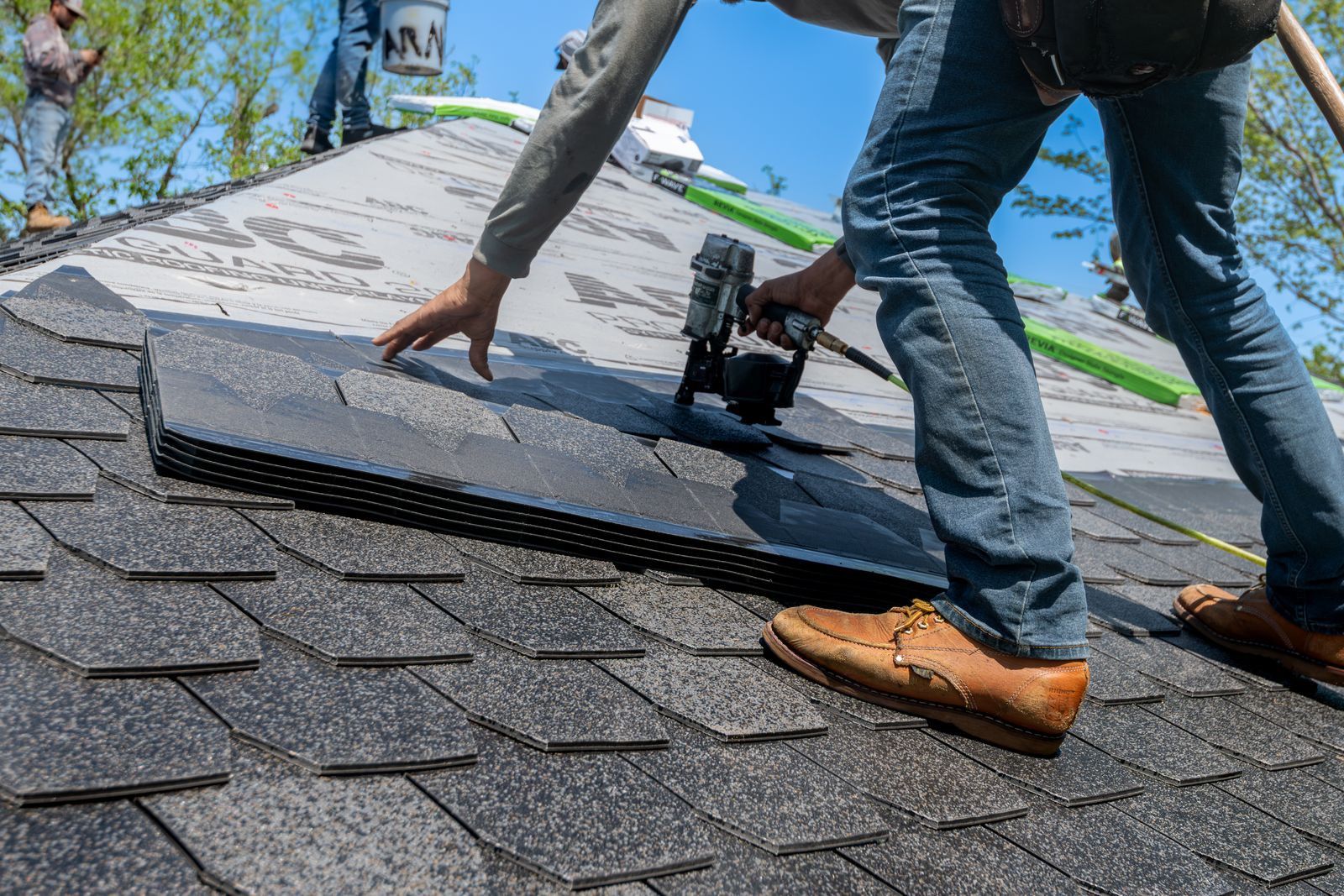
Roof work is the usual entry point in storm country. Replacing a covering after hail can pull in current requirements for deck attachment, underlayment, drip edge, or fastening patterns that weren’t required when the roof was first put on. Electrical is another: a panel or circuit that was legal in 1996 may need updating when it’s opened up. Insulation, egress windows in a finished basement, stair geometry, and smoke and carbon monoxide detection all move over time.
Then there is the threshold problem. Many jurisdictions apply a rule where damage above some share of a structure’s value triggers a full-compliance rebuild rather than a patch. A house that was 60% fine before the storm can end up wholly demolished because the surviving 60% no longer conforms.
The three pieces this coverage usually has
Policies vary on this more than people expect, but ordinance or law coverage generally breaks into three parts, and it is worth knowing they are separate.
The first is the loss to the undamaged portion of the building — the part that was standing fine and got torn down anyway because code said the rebuild had to be uniform. The second is demolition and debris removal for that undamaged portion. The third is the increased cost of construction itself: the upgraded materials, the added structural work, the current-code version of what used to be there.
Some forms bundle these; some price them separately; some cap the whole thing at a modest percentage of the dwelling amount. Which arrangement is on a given policy is stated on the declarations page and in the form attached to it, and that document is the thing that answers the question.
The honest part
Most homeowners will never trigger this. It has no effect on a fence claim, a water heater, or a single-slope roof replacement in a jurisdiction with no upgrade requirement. It matters at the far end — total losses, near-total losses, and the damage-threshold cases — which is exactly the tail that’s hardest to plan for and easiest to leave out of a quote comparison.
It’s also, frankly, one of the least visible items on a homeowners policy. Nobody shops on it. It doesn’t appear in an online rate comparison. It surfaces the first time an adjuster and a city inspector disagree about what “repair” means, which is a bad afternoon to be learning the term.
If it has been a while since anyone read through the dwelling section of your policy line by line, our home insurance page lays out how we go through it, or call (405) 861-8500 and we’ll pull the form and look at it with you.
This article is general information about how coverage typically works, not advice about your specific situation. Policy language — not website descriptions — determines coverage, and your policy is the only thing that says what you have.