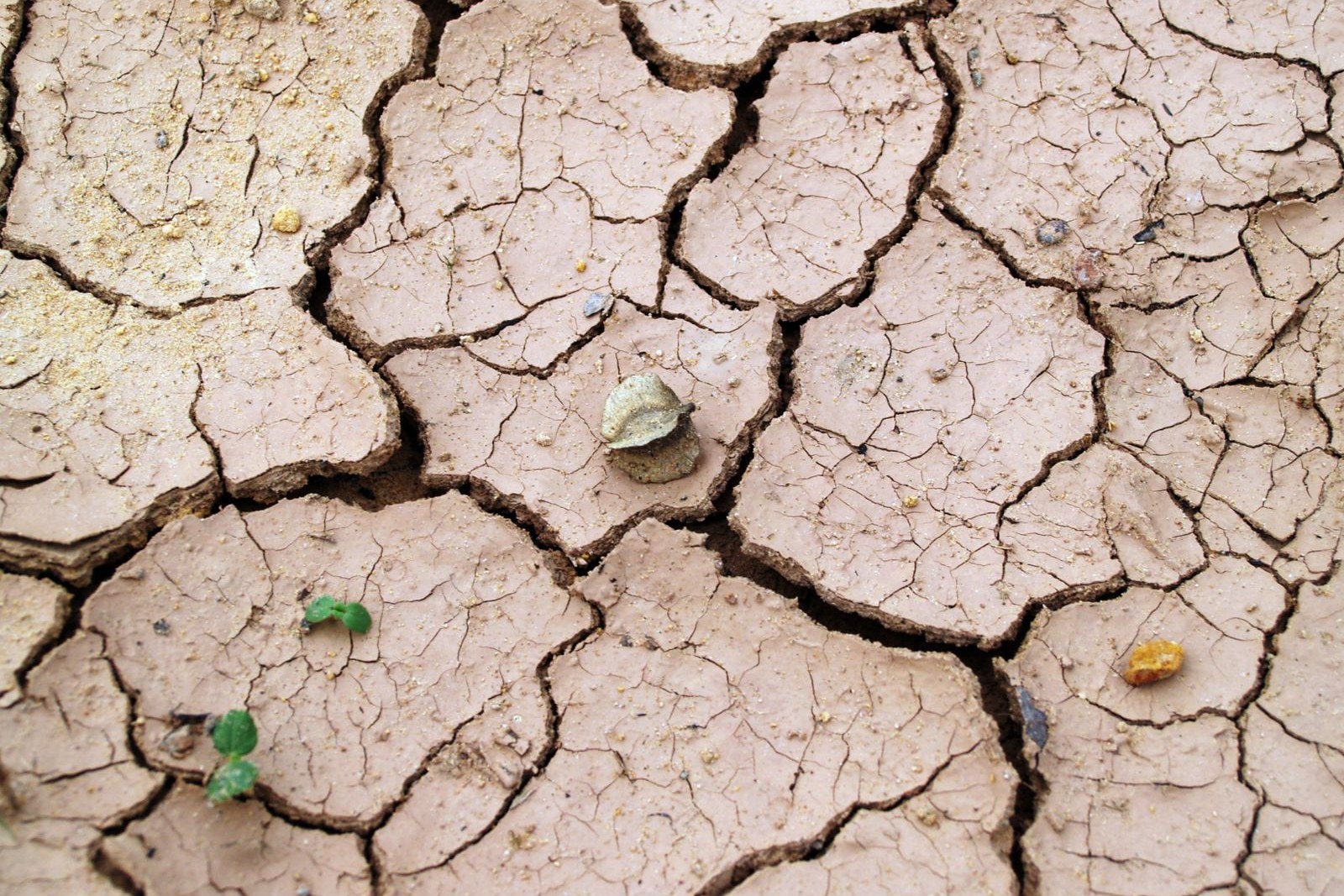
By late July, central Oklahoma yards tell the story: gaps opening along the edge of the slab, soil pulling away from the foundation, hairline cracks over doorframes that weren’t there in April. This is the season for it. And it prompts one of the most common questions we get in a dry August — “is my foundation covered?” — which deserves a more honest answer than most articles give it.
The Ground Under the Metro Actually Moves
This isn’t a figure of speech. The Oklahoma Geological Survey classifies more than 75% of the state’s bedrock units as possible sources of expansive soils — clays that swell when they take on water and shrink when they dry out. The most reactive of them, smectite clays, can swell to 1.5 to 2 times their dry volume when saturated, then give all of that volume back in a drought.
A slab foundation sits on top of that cycle. A wet spring swells the soil; a scorching, rainless stretch — the kind the metro gets most summers — shrinks it unevenly, usually fastest at the edges of the house where sun and thirsty landscaping pull moisture out. The slab bridges soil that’s no longer pushing back evenly, and the house shows it: sticking doors, drywall cracks, brick veneer stair-stepping along mortar lines.
Here’s the Honest Part
Slow foundation movement from soil shrinking and swelling is typically not covered by homeowners insurance. Most policies carry an earth movement exclusion, and most also exclude settling, shrinking, and expansion as a class of gradual loss. Insurance is generally built around sudden, accidental events — and a foundation that moves a quarter-inch over three summers is neither. We’d rather say that plainly in July than have anyone discover it in an adjuster’s letter.
So why write about it at all? Two reasons.
Where the Line Usually Sits
First, because the line between “excluded settling” and “covered event” is genuinely worth understanding. Policies tend to treat causes differently. Gradual soil movement under a dry slab is one thing; a sudden plumbing failure — a supply line letting go under the foundation, washing out the soil beneath it — involves different policy language, and the water damage side of such an event is often handled differently than the settling side. Which parts respond, and how, comes down to the specific wording on causes of loss, water, and earth movement. That section of the policy is dense, and it’s exactly the part worth reading in a state built on clay.
Second, because the exclusion changes the math on prevention. When insurance typically won’t pay for the slow version of this problem, keeping it from happening is the whole game — and the tools are cheap. Consistent moisture around the perimeter during dry stretches (soaker hoses exist for exactly this), gutters and downspouts that discharge well away from the slab, trees planted with their mature root reach in mind. None of it is glamorous. All of it is cheaper than piers.
Worth a Conversation Before It’s a Crack
If there’s movement showing up at your place — in Guthrie, Deer Creek, Edmond, or anywhere on the metro’s clay — a policy review won’t fix the soil, but it will tell you exactly how your coverage is written on earth movement, water, and everything in between, so nothing about it is a surprise later. Learn about our home insurance services, or call (405) 861-8500 and we’ll read the exclusions section with you. Bring the policy; we’ll bring the translation.
This article is general information about how coverage typically works, not advice about your specific situation. Policy language — not website descriptions — determines coverage, and your policy is the only thing that says what you have.