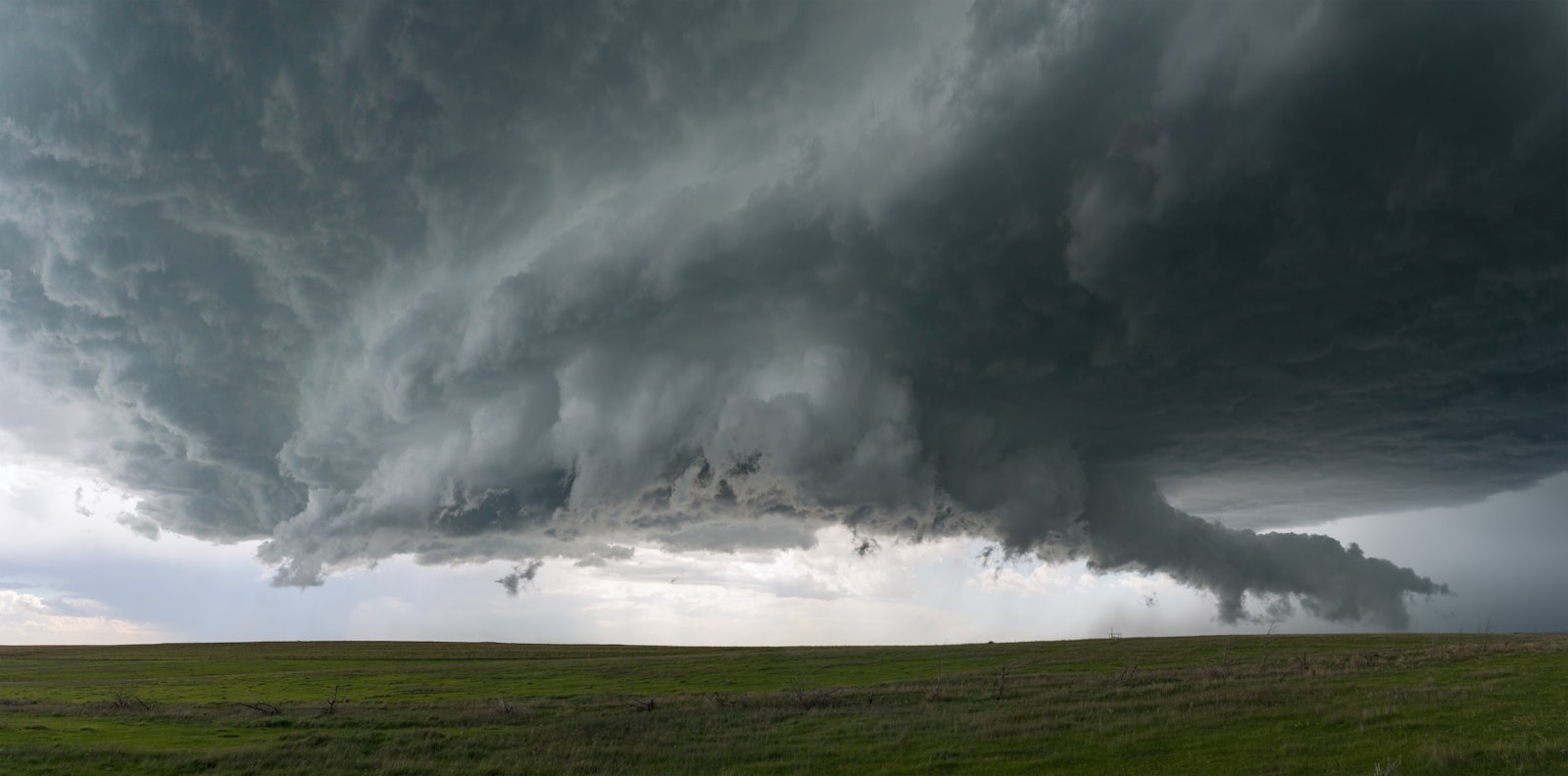
NOAA’s Storm Prediction Center keeps a record of every tornado in the country since 1950. Filter it to tornadoes that touched Oklahoma County and you get 136 of them through 2024. Eighty-nine were rated F0 or F1 (EF0 or EF1 after 2007) — the kind that peel shingles, flatten fences and drop limbs on cars. Twenty-three were rated 3 or stronger. Four reached F4 or F5: April 30, 1978; May 3, 1999; May 8, 2003; and May 10, 2010. That split is the most useful thing in the record for a homeowner in Edmond or Deer Creek, because it says which part of the policy actually gets used.
Where the numbers come from
The SPC tornado database is a public CSV, one row per tornado, with up to four counties listed for each track. We counted every tornado whose track included Oklahoma County (FIPS 109), then did the same for Cleveland, Canadian and Logan. Ratings before 2007 use the original Fujita scale and after it the Enhanced Fujita scale; both run 0 to 5, and the SPC explains the difference. One tornado in each county carries no rating at all.
A few things the record says plainly:
- May owns the calendar. Fifty-seven of Oklahoma County’s 136 came in May, another seventeen in April. Together that is 54 percent of the total in two months.
- October is real. Twelve of the 136 arrived in October, eight more in November. That is twenty tornadoes in the “second season” — more than June’s fifteen.
- The count is not rising much here. Oklahoma County logged 22 tornadoes in the 1960s, 22 in the 1970s, 21 in the 2000s and 23 in the 2010s. The 2020s are at 14 through 2024.
- Cleveland County is the deadly one. It has fewer tornadoes (109), but the tornadoes that crossed it killed 76 people along their full tracks, against 45 for Oklahoma County, and eight of them were rated F/EF4–5 — the 1999 Bridge Creek–Moore F5 and the 2013 Moore EF5 among them. Canadian County has 110 tornadoes and 21 deaths; Logan has 62 and 12.
What a “typical” tornado claim looks like around here
If two-thirds of the county’s tornadoes are weak, then two-thirds of the county’s tornado claims are not total losses. They are roof claims. Fence claims. A detached shop with the door blown in. A tree through the back windows. That is the honest shape of the exposure, and it changes which paragraph of a homeowners policy does the work.
A total loss lives in the dwelling limit — Coverage A — and the question there is whether the number on the declarations page would rebuild the house at today’s cost. A weak-tornado claim lives in the deductible. Most homeowners policies written in Oklahoma carry a separate wind/hail deductible expressed as a percentage of the dwelling limit, so a $325,000 house with a 2 percent wind/hail deductible starts a roof claim $6,500 in the hole. On an EF0 that takes forty squares of shingles and a fence, the deductible can be most of the loss.
The finding that does not flatter anybody
Here is the part we would rather say ourselves. The conversation people want to have in April is about the big one — 1999, 2013 — and whether the house is insured to value. That is a fair conversation and we have it. The conversation people rarely want to have is about the deductible, and the record says the deductible is what gets tested, over and over, in the 89 weak tornadoes for every 4 violent ones.
We have written plenty of policies where the wind/hail deductible was chosen for the premium it saved rather than for the claim it would produce. Nobody was misled; the trade-off was real. But the SPC record is a reminder that in this county the trade-off is exercised far more often than the dwelling limit is.
What the policy answers
Whether wind and hail carry a separate deductible, whether it is a flat dollar amount or a percentage, whether the roof settles at replacement cost or actual cash value after a certain age, and whether the detached shop is on Coverage B at a limit that reflects what is in it — your policy is the thing that answers this, and it answers it on the declarations page, not in a brochure.
If you would like to read that page together before the second season starts in October, our home insurance page is the place to start, or call (405) 861-8500 — we serve Deer Creek, Edmond and the rest of Oklahoma County, and we will pull the record for your side of the county while we’re at it.
This article is general information about how coverage typically works, not advice about your specific situation. Policy language — not website descriptions — determines coverage, and your policy is the only thing that says what you have.