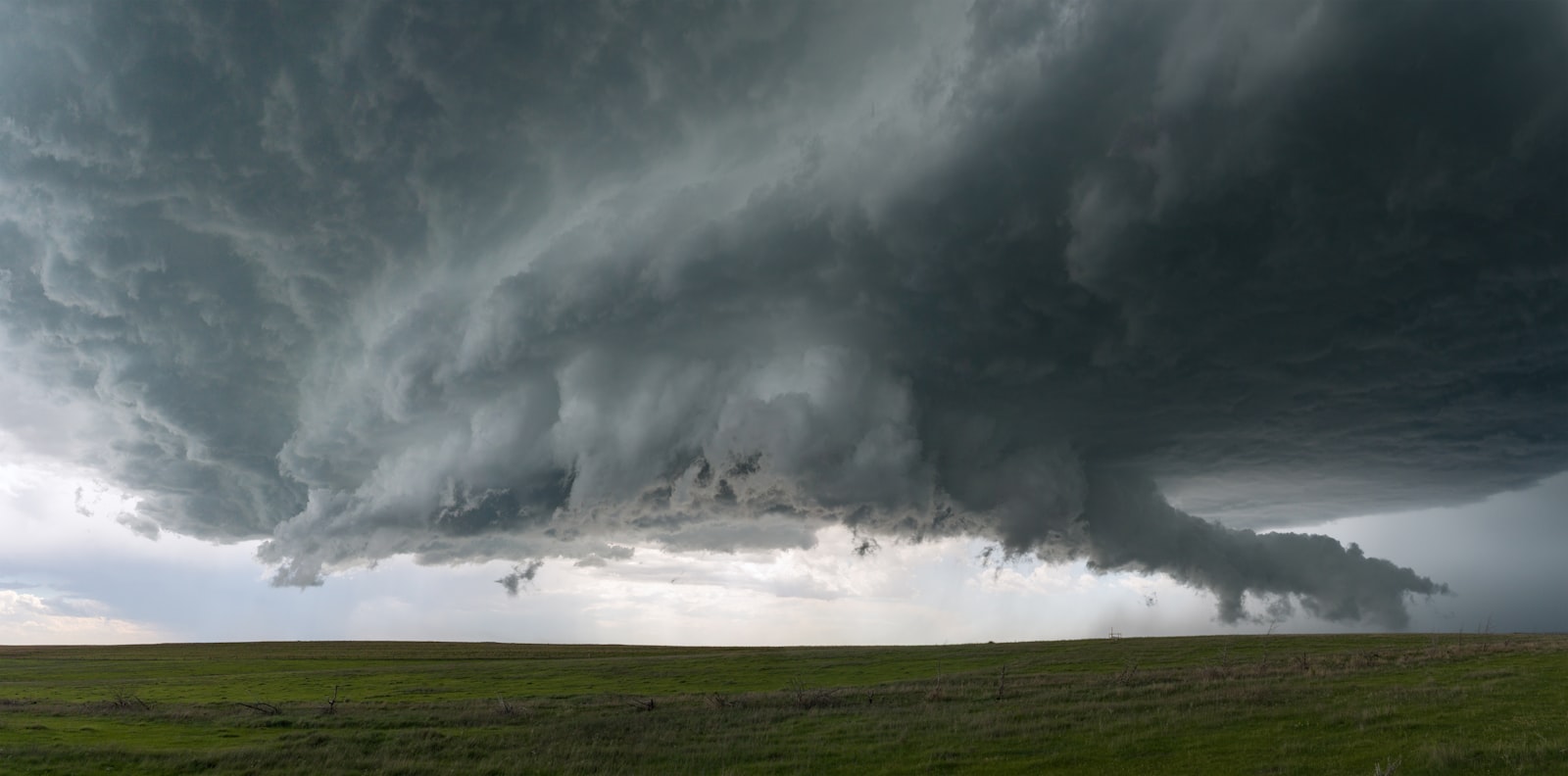
Oklahoma’s severe weather does not end in June. The state has a second, smaller storm window in the fall — generally mid-October into November — when the same collision of warm Gulf air and southbound cold fronts that drives spring storms sets up again. It is shorter and far less dependable than spring, but it is real. In November 2024, the National Weather Service confirmed 33 tornadoes in Oklahoma. That was a record November, and it landed inside a record year: 152 tornadoes statewide, breaking the 149 set in 2019.
What 2024 actually showed
The Oklahoma Mesonet’s year-end summary is worth reading slowly. Two record months carried the year — 56 tornadoes in April and 33 in November. Most were on the weaker end, 34 rated EF0 and 71 rated EF1, but there were eight EF2s, seven EF3s and two EF4s in there as well.
The April number surprised nobody. The November number is the one that changes how a person thinks about the calendar. A month most Oklahomans file under football and first freezes produced more tornadoes than most Aprils do.
Why fall storms land differently
Three things make the autumn window behave unlike May around here, and none of them are about the storms themselves.
The first is roofs. A fall storm frequently arrives on a roof that already took hail in April or May. If the spring damage was never inspected or documented, the fall claim turns into an argument about which event did what — and that is a slower, more frustrating conversation than either claim would have been alone.
The second is daylight. Fall days are short, so more of the severe window falls after dark. Storms that arrive at nine at night in Guthrie or Piedmont get less warning lead time in practice, simply because fewer people are watching.
The third is attention. Nobody in Edmond needs reminding to think about weather in early May. Late October is different. The habits that keep a household ready in spring — knowing where the shelter is, having photos of the house on a phone — tend to have quietly lapsed by then.
The part that touches a policy
Two mechanics matter more in fall than in spring, and both are worth understanding before rather than after.
Wind and hail deductibles on Oklahoma homeowners policies are commonly written as a percentage of the dwelling limit rather than a flat dollar amount. Because that percentage floats with the coverage amount, a home whose dwelling limit has climbed over a few years carries a bigger dollar deductible than it did the last time anyone looked at the declarations page. Nothing about that changes in October, but October is when people find out.
The second is documentation. Policies vary on how prior damage is handled more than people expect, and a set of dated photos of a roof, fence and gutters taken on an ordinary afternoon in September is worth a surprising amount in a January adjuster conversation. That is not a coverage claim on our part — it is a paperwork observation. Your policy is the thing that answers what happens next.
The honest caveat
Most Oklahoma Novembers are unremarkable. 2024 was an outlier, and treating one record month as the new baseline would be its own kind of mistake. The point is not that fall is dangerous. The point is that the fall window exists, it is capable of a record, and around here it usually gets planned for like it doesn’t.
If it has been a few years since anyone walked through what your homeowners deductible actually is in dollars, our home insurance page lays out how we approach it, or call (405) 861-8500. We’d rather have that conversation in September than in the parking lot after.
This article is general information about how coverage typically works, not advice about your specific situation. Policy language — not website descriptions — determines coverage, and your policy is the only thing that says what you have.